We don’t simply see the world as it is. We experience it through the continuous interaction of sensory information, attention, memory and interpretation.
Light Literacy™ brings awareness to this process.
Through guided encounters with light, colour, movement and kaleidoscopic geometry, we explore how visual experiences shape our attention, the meanings we create and the responses we notice within ourselves.
Rather than telling us what to see or feel, Light Literacy™ invites us to become curious about how we perceive.
Light makes the visible world accessible to us. Through its interaction with surfaces, objects and space, we perceive colour, shape, texture, movement and depth.
But seeing is more than the physical act of receiving light.
Our visual systems continuously organise sensory information, while the brain draws upon attention, memory and experience to interpret what we see. This is why two people can encounter the same visual environment and experience it differently.
Colour, contrast, rhythm and geometric patterns can influence what captures our attention and how we experience a space.
Within Light Literacy™, these relationships become opportunities for exploration. Rather than assigning fixed meanings to visual experiences, we begin by observing what we notice, how we respond and what those responses might reveal about our individual ways of perceiving.
A study in mindful awareness
From Seeing to Awareness
We see constantly, but how often do we notice the act of seeing itself?
Our attention moves between colour, form, movement and meaning, often without us recognising how these impressions shape our experience.
Light Literacy™ invites us to become curious about that process.
When we look again, we may notice something previously overlooked, recognise a familiar pattern differently, or discover how our own attention influences what we perceive.
The invitation is not to see something extraordinary, but to become more aware of how we see.
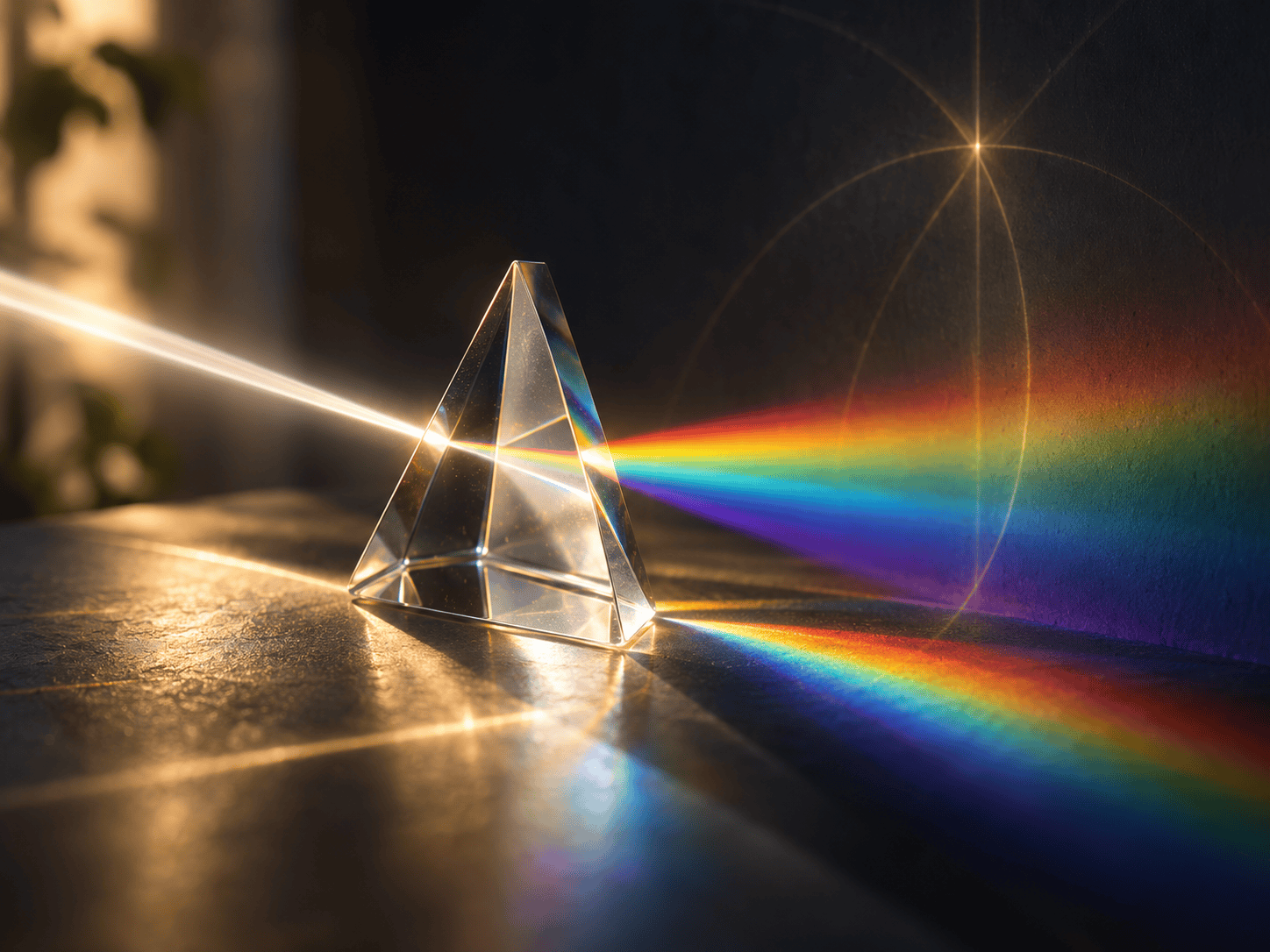
FIG. 09 // REFRACTION STUDY
THE GUIDED EXPERIENCE
Where Observation Becomes Personal
Light Literacy™
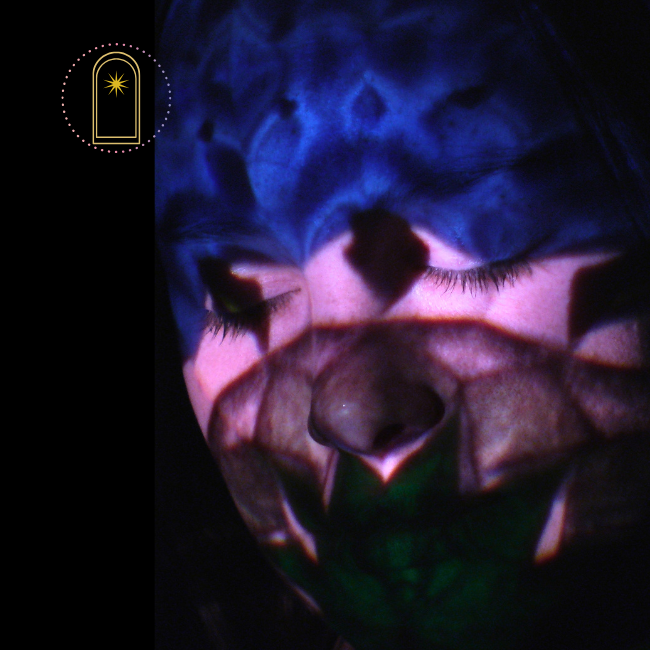
Light Literacy™ is explored through guided encounters with colour, movement and kaleidoscopic geometry.
Participants are invited to observe what captures their attention, notice how they respond and explore the sensations, associations or emotions that may arise.
There is no prescribed outcome. Each experience begins with what the individual notices.
Visual exploration
Moving light, colour and geometric patterns create opportunities to explore visual attention, recognition and perception.
Rather than searching for a particular meaning, participants are encouraged to notice what draws their gaze and how their experience changes over time.
Reflective enquiry
Gentle, open-ended questions invite curiosity about what is being experienced.
Reflection provides an opportunity to recognise associations, explore personal meanings and consider familiar ways of interpreting situations without judgement.
Embodied awareness
Attention extends beyond the visual experience to include bodily sensations, breathing and emotional responses.
Participants are invited to notice how their experience is felt, without forcing change or assigning fixed meanings to physical sensations.
EPILOGUE
Learning to Notice Differently
What we discover through light and perception does not have to remain within the experience itself.
As we become more aware of how we see, interpret and respond, we may begin to recognise familiar patterns in everyday life: in our relationships, our environments and the choices we make.
Light Literacy™ invites us to carry that curiosity beyond the visual encounter, recognising that a change in attention can open the possibility of a different perspective.
Sometimes, seeing differently begins simply by noticing what we have always overlooked.