Exhale

There’s a moment where someone asks you what you do,and you realise how difficult it is to answer simply. Not because it’s complicated,but because people don’t yet have a reference for it. Yesterday, I found myself trying to explain light therapy in the most ordinary way I could. Not energy. Not healing. If the body […]
Literacy Over Revolution

There is a temptation, when discovering something powerful, to frame it as disruptive. Revolutionary. Paradigm-shifting. I resist that language. What I am interested in is literacy. The ability to read how rhythm, pattern, symmetry and colour influence perception. The ability to notice when interpretation is strained. The ability to adjust inputs consciously. Literacy is slower […]
Cognitive Saturation Is Not a Personal Failure
Colour is not only aesthetic. It is interpretive bias. Different wavelengths of light influence contrast perception and depth cues. They alter figure-ground relationships. When I worked with sustained colour exposure, sitting with red, or blue, or green fields, I observed shifts in internal narrative tone. Red intensified boundary awareness. Blue softened edge perception. Green often […]
Colour and Interpretation

Colour is not only aesthetic. It is interpretive bias. Different wavelengths of light influence contrast perception and depth cues. They alter figure-ground relationships. When I worked with sustained colour exposure, sitting with red, or blue, or green fields, I observed shifts in internal narrative tone. Red intensified boundary awareness. Blue softened edge perception. Green often […]
Rhythm and Voluntary Regulation

Alpha brain rhythms — oscillations in the 8–12 Hz range — are often associated with relaxed, attentive states. In the mid-20th century, artists and experimenters built devices that used flickering light to gently nudge the brain toward alpha states. One of the most well-known was the Dreamachine, developed by Brion Gysin and Ian Sommerville. The […]
Symmetry and the Cost of Fragmentation
The brain is a compression machine. It searches for pattern because pattern reduces energy expenditure. When information is compressible, processing cost drops. Symmetry is highly compressible. A symmetrical pattern allows the brain to predict one half from the other. Fewer surprises. Lower computational demand. In contrast, digital media is designed for asymmetry and interruption. Jump […]
Perception Is Not Passive
For a long time, I assumed perception was something that happened to me. Light entered the eyes. The world appeared. I responded. It felt immediate, direct, obvious. Only later did I discover that neuroscience describes perception very differently. The dominant theory in cognitive science, often referred to as predictive processing, suggests that the brain is […]
Your body is a living light system – Your Body is Electric
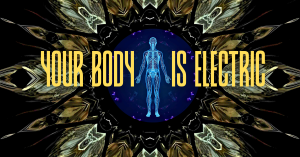
Your Body is a Living Light System – Your Body is Electric Every cell in your body glows. It may be invisible to the naked eye, but science confirms that living systems emit light — faint streams of biophotons that allow communication across the body’s biofield. You are not just flesh and chemistry. You are […]
Colour as Food for the Nervous System
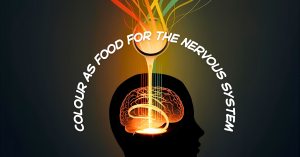
Colour as Food for the Nervous System We often think of nourishment in terms of food and water. Yet your nervous system hungers too — and colour is one of its primary sources of nourishment. Just as the body requires vitamins and minerals, the biofield requires frequencies of light. Every shade you encounter enters your […]
Why Kaleidoscopes Aren’t Toys
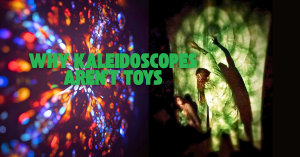
Why Kaleidoscopes Aren’t Toys For most people, kaleidoscopes belong to childhood — whimsical tubes of glass and mirrors. Yet to those who look more deeply, kaleidoscopes are not toys. They are instruments of perception, teachers of symmetry, and guides into coherence. A single turn can shift chaos into beauty. Fragmented shapes fall into pattern, and […]